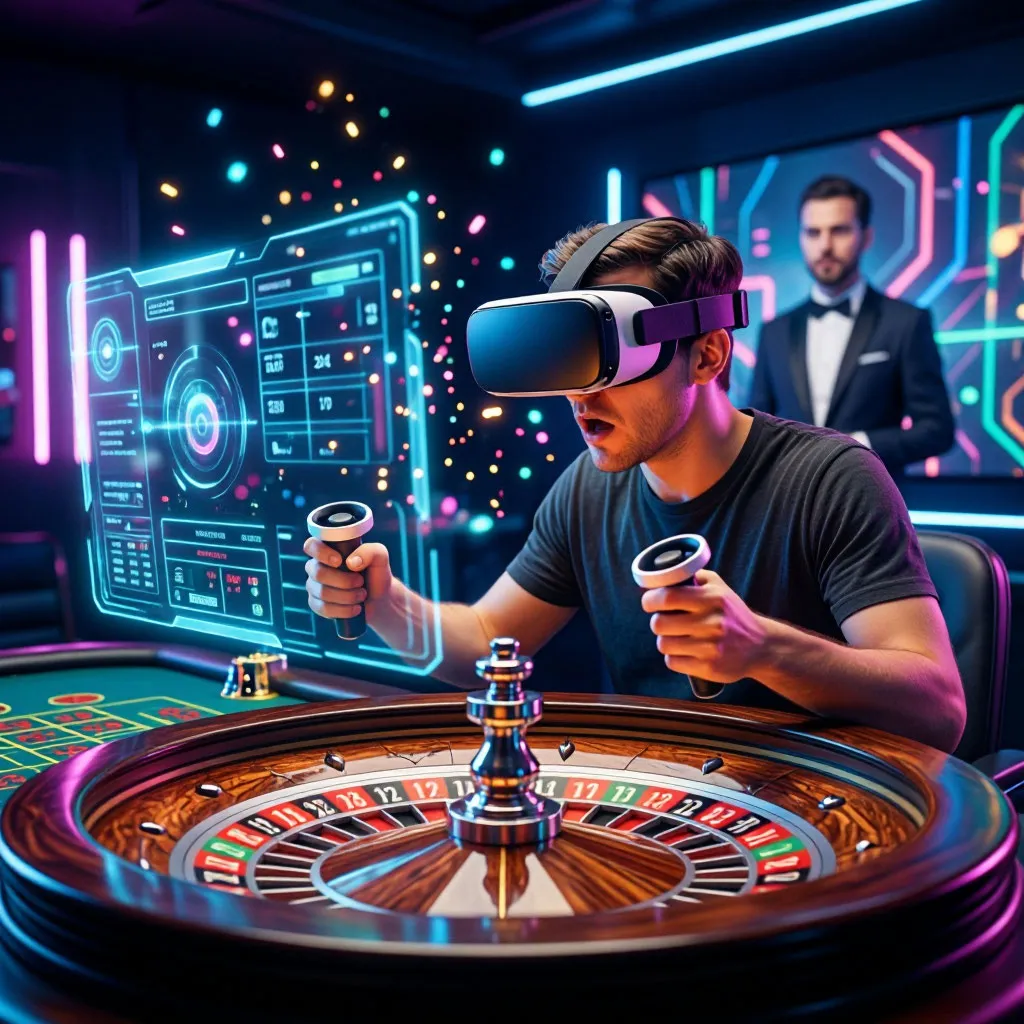
The click of a computer mouse and the swipe of a smartphone screen have defined the online casino experience for over two decades. While live streaming technology brought real dealers into our living rooms, a digital barrier still remained, keeping players separated from the authentic atmosphere of physical casino halls. The rise of VR live roulette represents a massive leap forward, shattering this glass screen and placing players directly inside a fully realized, three-dimensional gambling space. By merging real-time video feeds with spatial environment modeling, virtual reality headsets are transforming how we interact with the wheel, the dealer, and other players.
The shift from flat screens to virtual dimensions
Sitting at a desk staring at a flat two-dimensional broadcast can feel passive, making it hard to capture the true excitement of a physical casino floor. Wearing a virtual reality headset changes this dynamic entirely by replacing your room with a highly detailed, 360-degree virtual penthouse or land-based casino layout. In this environment, you do not just watch the wheel spin; you can turn your head to look at the elegant decor, watch other tables in the background, and witness the dealer smile directly at you.
To experience this immersive environment, players can utilize several popular consumer hardware options currently available on the market:
- Meta Quest 3: a standalone headset that offers high-resolution lenses and hand-tracking without requiring a connection to a computer.
- Apple Vision Pro: a premium spatial computing device that blends physical and virtual worlds with ultra-high-definition displays.
- PlayStation VR2: a console-dependent headset featuring advanced haptic feedback and eye-tracking technology.
- HTC Vive Pro 2: a high-end PC-tethered option preferred by enthusiasts for its supreme graphical fidelity and tracking precision.
These hardware platforms provide the physical window into the virtual world, transforming how digital data is rendered for the user. By combining high-definition screens with motion sensors, they allow your natural body movements to dictate your view of the gaming floor.
The technology behind VR live roulette systems
Merging a real human dealer with a fully virtual 3D environment requires an intricate technological setup that goes far beyond standard webcam streaming. Casinos use green screens, multiple high-angle cameras, and specialized software to extract the real-time physical dealer and the physical wheel, placing them seamlessly into a rendered 3D casino room. This hybrid environment creates a striking sense of physical presence that traditional interfaces cannot hope to match.
To understand how this advanced medium stacks up against older digital formats, it helps to compare the core characteristics of the three main ways to play roulette online:
| Feature | Traditional online roulette | Standard live dealer roulette | VR live roulette |
|---|---|---|---|
| Visual perspective | Flat 2D or 3D graphics | Single or multi-camera video feed | Full 360-degree virtual environment |
| Physical interaction | Clicking buttons on a menu | Clicking buttons overlaid on video | Reaching out to place physical-looking chips |
| Spatial audio | Simple stereo sound effects | Standard studio audio | True 3D positional audio based on head movement |
| Social presence | Text chat box only | Text chat box with dealer voice replies | Avatar gestures and natural spatial conversations |
This comparison highlights how the virtual reality format bridges the gap between home-based convenience and genuine casino atmosphere. Rather than simply watching a broadcast, you occupy the same spatial environment as the table, which significantly boosts the excitement of every spin.
Step-by-step guide to entering the virtual casino
Getting started with this modern way of playing might seem intimidating to those who are new to spatial computing. However, developers have worked hard to make the onboarding process as intuitive as possible, matching the simplicity of standard gaming applications.
If you want to step onto the virtual floor and start placing bets at a real table today, you can follow this simple sequence:
- Set up your headset: power on your VR device, adjust the head straps, and calibrate your boundary space to ensure a safe playing area.
- Launch a compatible browser or application: open the casino’s dedicated virtual application or use a WebXR-compatible browser to access the lobby.
- Create your digital avatar: customize your virtual representation so other players and the dealer can recognize you at the table.
- Join a live table: walk up to an open roulette table, pick up your virtual chips with your controllers, and place them on the betting layout.
By following these steps, you quickly transition from a standard internet user to an active participant in a living, breathing casino environment. The intuitive nature of picking up and placing chips by hand makes the gaming process feel incredibly natural.
Overcoming current limitations of the technology
Despite the incredible progress made in spatial computing, the widespread adoption of immersive live gaming still faces a few practical hurdles. High-quality headsets remain a significant financial investment, and some users experience mild motion sickness during extended play sessions. Additionally, streaming high-definition, 360-degree video feeds in real-time requires a very stable, high-speed internet connection to prevent lag or visual stuttering.
As technology continues to advance, these barriers are rapidly dissolving. Lighter headsets, improved motion tracking, and faster network infrastructure are making the experience more comfortable and accessible to a broader audience. The slow but steady fusion of physical live dealers with virtual spaces is paving the way for a brand-new standard of online gaming that will eventually make flat-screen alternatives feel completely obsolete.